
Congress president Mallikarjun Kharge vowed to fight for the restoration of statehood to Jammu and Kashmir, asserting that he would remain active in politics until Prime Minister Narendra Modi is ousted from power.

The number of fresh formal jobs generated in a month increased to a seven-month high in April, signalling a recovery in the formal labour market in the country, according to the latest monthly payroll data released by the Employees' Provident Fund Organisation (EPFO) on Thursday. In April, the number of new monthly subscribers under the Employees' Provident Fund (EPF) sequentially increased by 18.77 per cent to 887,438 from 747,146 in March.

Private sector banks reported a robust profile with healthy growth in net interest income (NII), credit offtake and reduction in provision burden for the fourth quarter ended March 2023 (Q4 of FY23). However, as a pack, their net profit declined by 9.7 per cent year-on-year (YoY) at Rs 25,317 crore in Q4. This is because Axis Bank posted losses due to its one-time hefty charge for the acquisition of Citibank India's consumer business.

The pre-Budget Survey said for wealth to be distributed, it first has to be created and called for looking at wealth creators with respect. The Survey said government interventions seem to be ineffective in stabilising prices of commodities such as onions.

During April-June this fiscal, the core industries grew by 4.8 per cent compared to 3.5 per cent in the corresponding period the previous year. Cement production increased by 12.8 per cent in June against 6.6 per cent a year ago, while coal production rose by 14.7 per cent during the month against 6.1 per cent in June 2008.

Thermax reported 13 per cent Y-o-Y revenue growth with operating profit margin decline in Q1FY25. It took a hit of Rs 70 crore on specific projects. The company enjoys a strong order pipeline across sectors like power, steel, refining and petrochemicals.

Finally, some good news for the Indian startup ecosystem. After four consecutive half-year periods of declining funding since 2022, the first half (H1) of 2024 has shown an upward trend compared to the second half (H2) of 2023. According to the India Tech Semi-Annual Funding Report H1 2024 by Tracxn, Indian technology (tech) startups raised $4.1 billion in H1 2024, marking a 4 per cent increase from $3.96 billion in H2 2023.

Billionaire Mukesh Ambani's Reliance Industries Ltd is the most valuable private company in the country, as per Hurun India's 2022 Burgundy Private Hurun India 500 list. The list, which was released on Tuesday, stated that with a value of Rs 16.4 lakh crore, Reliance is India's most valuable company, followed by Tata Consultancy Services (TCS) with Rs 11.8 lakh crore and HDFC Bank with Rs 9.4 lakh crore. Reliance is also the highest taxpayer with a payout of Rs 16,297 crore and the most profitable company with a bottomline of Rs 67,845 crore in 2022-23.

'In the case of corporate credit, especially to AAA borrowers, lenders will have to take a fresh look at pricing.'

Structural reforms, pro-people programmes and employment opportunities helped the economy get new vigour, the finance minister said. After contracting by 5.8 per cent in 2020-21, the economy recorded a growth of 9.1 per cent in 2021-22.

The country's economy will start witnessing a growth of 6.5 to 7 per cent from fiscal 2023 onwards, helped by various reforms undertaken by the government so far and also as COVID-19 vaccination drive progresses, Chief Economic Advisor Krishnamurthy Subramanian said. He said the second wave of COVID-19 is unlikely to have a very significant on the economy. The country's economy contracted by 7.3 per cent in fiscal 2020-21. "Together with the reforms and focus on vaccination, I expect growth to start hitting close 6.5 to 7 per cent from FY23 onwards and accelerate from there on," Subramanian said at a virtual event organised by Dun & Bradstreet.

At least 28 people died in rain-related incidents Sunday as heavy downpours lashed north and northwest India, causing landslides, traffic chaos and house collapses, as well as a dam breach which inundated several villages in Haryana.

The size of Reserve Bank's balance sheet increased by 11.08 per cent to Rs 70.47 lakh crore as on March 2024, leading to the highest-ever dividend payout to the government, according to the central bank's annual report. In actual terms, the increase was Rs 7,02,946.97 crore over Rs 63.45 lakh crore as on March 2023.

ICICI Lombard General Insurance Company reported financial improvement and optimistic commentary in Q4FY24. It reported 17 per cent year-on-year (YoY) growth in Gross Written Premium (GWP) and 115 bps improvement in the Combined Ratio (COR) in FY24, and improved COR guidance with COR going from 104.5 per cent in FY23 to 103.3 per cent in FY24, 102.4 per cent in FY25 and 102.0 per cent in FY26.

Tata Steel, Tech Mahindra, NTPC, JSW Steel, Power Grid, UltraTech Cement, HCL Technologies and HDFC Bank were among the major gainers. Bharti Airtel, Hindustan Unilever, Axis Bank, Reliance Industries, Kotak Mahindra Bank, ICICI Bank and IndusInd Bank were among the laggards.

India's fast-moving consumer goods (FMCG) sector witnessed growth in rural consumption in volume terms outpace urban consumption for the first time in five quarters, in the January-March period. According to a report from consumer intelligence firm NIQ, rural consumption grew at a rate of 7.6 per cent year-on-year (Y-o-Y) in Q1CY24, overtaking that in urban areas which stood at 5.7 per cent.

The launch of a range of electric motorbikes (e-bikes) by Bengaluru-based Ola Electric, a first for the company, has disconcerted the industry because the low price the firm claims to be offering has the potential to disrupt the market. On August 15, Ola unveiled its Roadster series e-bike with a starting-price at Rs 74,999. This new pricing undercuts the previous lowest price in the category, which was Rs 110,000.

India Inc reported an uptick in revenue growth in the January-March quarter (Q4) of 2023-24 (FY24), but it came at the cost of a deceleration in earnings growth.

The generation of quality jobs and skill development should be the focal point, cutting across ministries and departments, asserts Nivedita Mookerji.

Several Opposition leaders, including former Congress chief Rahul Gandhi, on Wednesday attacked the government over a media report claiming that a key Adani group investor is also co-owner with the conglomerate in a defence firm.

Backed by the 'China Plus One' sentiment globally, India's textile exports is expected to grow by 81 per cent to $65 billion by 2026 from the pre-Covid level of around $36 billion in 2019, said a report by the Confederation of Indian Industry (CII) and global consulting firm Kearney. This jump is likely to generate 7.5-10 million new jobs. A large chunk of this targeted increase, or around $16 billion may come from the China Plus One sentiment due to India's relatively large strategic depth compared with Vietnam or Bangladesh, the report said.

The Reserve Bank on Wednesday approved a Rs 2.11 lakh crore dividend payout to the central government for 2023-24, more than double the amount it paid for the previous 2022-23 financial year. The decision was taken at the 608th meeting of the Central Board of Directors of the Reserve Bank of India held under the chairmanship of Governor Shaktikanta Das.

According to the EPFO estimates, there would be a surplus of Rs 151.67 crore after providing 8.65 per cent rate of interest for 2018-19 on EPF.

'it's not just youth in India who are left behind because of their inability to find jobs; nearly two-thirds of Indian women of working ages do not participate at all in the paid labour force.'

After a sharp fall in the share prices of HDFC Bank and other private sector lenders in the past three days, the BFSI (banking, financial services and insurance) sector weighting in the Nifty50 has slipped to a seven-year low of 32.03 per cent, down from nearly 36.6 per cent at the end of March 2023 and 34.5 per cent at the end of December 2023.

Hindustan Aeronautics (HAL) is one of the largest beneficiaries of the defence indigenisation programme. The aerospace Public Sector Undertaking (PSU) has just received a new tender for 97 Light Combat Aircraft (LCA) Tejas Mk1A, and it is already servicing an earlier order for 83 LCA aircraft. The new order is worth around Rs 65,000 crore with a 65 per cent indigenisation component, whereas the earlier order (February 21) was worth Rs 45,700 crore with 55 per cent indigenisation.

The record contraction in the growth rate of eight core sectors will have its impact on IIP.

For over a decade, HDFC Bank consistently outperformed industry growth rates in both deposits and advances, maintaining impeccable asset quality. Amid a landscape where other banks struggled with soaring non-performing assets (NPAs), HDFC Bank thrived, eventually surpassing ICICI Bank to become the largest private sector lender in India. Its net interest margin (NIM) remained stable in the range of 4.1-4.4 per cent.

'The FSIB will conduct interviews for the SBI chairman position on May 21-22 as the tenure of the current chairman Dinesh Kumar Khara is scheduled to end by August.'

'Though one cannot paint the entire microcap basket with the same brush, investors need to be careful now as to what they're buying.'
Citing various macroeconomic parameters that are doing pretty well, India's G20 Sherpa and former CEO of Niti Aayog Amitabh Kant projected that the country is all set to overtake Japan as 4th largest economy in the world by 2025. The size of India's GDP is currently ranked 5th, after the US, China, Germany, and Japan. It overtook the UK in 2022.

Salaries in India are expected to increase by 9.5 per cent in 2024, slightly lower than the actual increase of 9.7 per cent in 2023, largely in response to market dynamics, according to global professional services firm Aon plc. According to the firm's annual salary increase and turnover survey 2023-24 India, that analysed data across 1,414 companies from almost 45 industries, salary increase in India seems to have stabilised at high single digits, after the post-pandemic high increments in 2022. "The projected increase in salaries in the Indian formal sector indicates a strategic adjustment in response to the evolving economic landscape.

Indian startups received about $6.5 billion in funding in the April-June 2021 quarter, while 11 of them entered the coveted unicorn club, a report by Nasscom-PGA Labs said. During the second quarter, 160 funding deals were closed -- up 2 per cent from the January-March period. "Q2 2021 has been impeccable for the start-up growth story. From being the most funded quarter, it has also added the most number of unicorns. "Standing tall during the pandemic second wave headwinds, Indian start-up ecosystem has shown a strong resilience in this quarter," the report said.

Reserve Bank of India (RBI) is unlikely to cut the benchmark interest rate at its upcoming monetary policy review meeting, taking place soon after the announcement of the Lok Sabha election results, amid inflation challenges, said experts. The Monetary Policy Committee (MPC) may also refrain from rate cut as economic growth is picking up, notwithstanding the elevated interest rate of 6.5 per cent (repo) prevailing since February 2023. The meeting of the Reserve Bank Governor Shaktikanta Das headed MPC is scheduled for June 5 to 7.

The new scheme may be announced before the Lok Sabha elections.

'I think some of us, like Mukesh Ambani, myself and those of us who head industrial units, ought to really focus on what we can really do to make the world a safer place, maybe 50 or 100 years from now.' 'For instance, how can we deal with climate change and global warming, right now?' 'The effects of it may not be felt now; in fact, we may pay a price for it today, but it will help the generations to follow.'
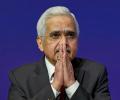
The highlights of RBI's bi-monthly monetary policy announced by Governor Shaktikanta Das:

Corporate India is starting to step up its capital expenditure plans amid government incentives and signs of rising demand, company executives and analysts have indicated. This coincides with the Reserve Bank of India (RBI) recently citing a double-digit growth in private capital expenditure. Healthy balance sheets of banks and corporates, along with increasing capacity utilisation and improving business sentiment, are contributing to a favourable environment for sustained growth in private sector investments, the RBI said in its policy last week.

As per the first advance estimates of national income released by the National Statistical Office (NSO) on Friday, the manufacturing sector output is estimated to grow to 6.5 per cent in the current fiscal compared to 1.3 per cent in 2022-23. Similarly, mining sector growth is estimated at 8.1 per cent in the current fiscal against 4.1 per cent in 2022-23.

Even as banks and finance companies are reporting record-high earnings, their weighting in the benchmark National Stock Exchange Nifty50 Index has seen a downward trajectory. Investors expect a stronger performance from other sectors in the new year. Currently, banking, financial services and insurance (BFSI) companies collectively hold a weighting of 34.5 per cent, down from 36.7 per cent at the end of December 2022 and a record high of 40.6 per cent at the end of December 2019. This represents the sector's lowest weighting in the index since December 2021 when it stood at 33.7 per cent.
